History and Tradition

As one of the first independent colleges of art and design in the US—incorporated on March , as both a school and museum—Rhode Island School of Design has always stood out as something of a maverick.
By the time RISD began offering full bachelor’s degree programs in the s, our reputation for vision and leadership in advanced studio-based education had already begun to grow.
Founding RISD: women lead the way
A radical experiment

RISD was founded and nurtured by a small group of women well before any woman in America gained the right to vote. That year Helen Adelia Rowe Metcalf urged members of the Rhode Island Women’s Centennial Commission to invest their group’s surplus funding of $,—which they had raised for RI’s contribution to the Philadelphia Centennial Exhibition in —in founding a school of art and design (instead of building a public fountain, one of the other options on the table).
The idea behind the college was driven by the desire to support the state’s thriving textiles and jewelry industries in particular, with the first courses of study offered at RISD addressing two main areas: Freehand Drawing and Painting and Mechanical Drawing and Design.
Under Metcalf’s able leadership, the women who founded RISD embarked on a radical experiment that set a precedent for its ongoing commitment to challenging expectations.
Forwarding the family legacy
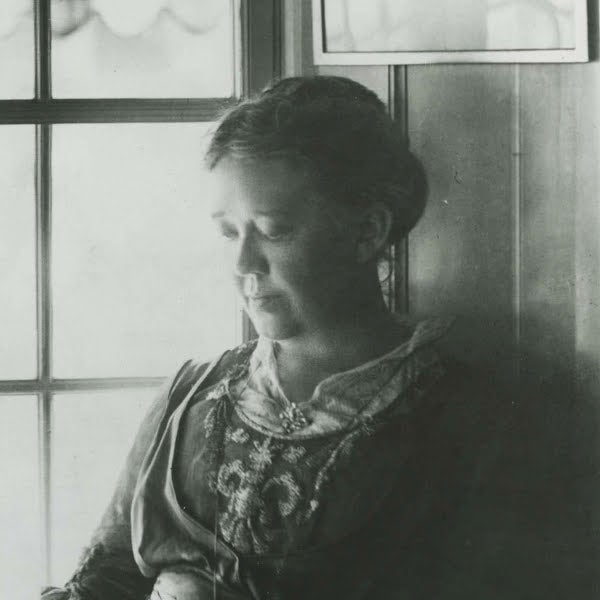 In pouring her time, energy, vision and funds into running the institution and ensuring its survival, Metcalf was joined by her daughter Eliza Radeke (pictured), who from – was the first woman to serve as RISD's president.
An avid and eclectic collector, Radeke worked closely with artists, dealers and museum directors to develop the RISD Museum's extensive collection and funded the construction of the gallery that connects Pendleton House to the museum building named in her honor.
Radeke was then succeeded by her niece Helen Metcalf Danforth, who was president from – before serving RISD's first Board of Trustees chair from –. It was during her tenure that RISD earned the right to grant college degrees (as opposed to certificates) in and became a fully accredited college in .
Looking back


Past presidents
Claudius Buchanan Farnsworth, –
As a member of the Rhode Island General Assembly and the first president of RISD's board, Claudius Farnsworth was responsible for bringing the school's original application for incorporation before the state's legislative body in . A graduate of Harvard College, he studied at Harvard Law School before being admitted to the Massachusetts Bar in . Farnsworth practiced law in Massachusetts and Rhode Island, maintaining an office at Cole's Block in Pawtucket, RI. He also served as treasurer of Dunnell Manufacturing Co., a textiles firm engaged in calico printing, from –.
Royal Chapin Taft, –
While RISD founder Helen Metcalf managed RISD on a day-to-day basis from –, Royal Taft served as what was then known as "president" of the board. Like his successor in this role, he also served as governor of Rhode Island for a term (–), which overlapped with his position at RISD. In addition, Taft served as a director of the Rhode Island Hospital Trust during this period in his life. A businessman, he moved to Providence in to work in the office of Royal Chapin, a woolen manufacturer, and in established his own textiles manufacturing company, Bradford & Taft, which he ran until .

Herbert Warren Ladd, –
A native of New Bedford, MA, Herbert Ladd worked as a correspondent for the New Bedford Mercury during the Civil War and entered the dry goods business in with the Boston firm of White Brown & Co. Once he moved to Providence in , he opened his own dry goods firm, H.W. Ladd Company, and served two one-year terms as governor—from – and –, helping to initiate construction of the RI State House. Today, Ladd is less remembered for his years as governor and serving as "president" of RISD's board at a time when the school was managed by founder Helen Metcalf than for the well-loved Ladd Observatory he donated to Brown University in and for the former Ladd School in Exeter, RI, which met the needs of children with developmental disabilities in the state for decades.

William Carey Poland, –
An graduate of Brown University, William Poland taught Greek and Latin as a professor of classics at Brown from – before being named the university's first professor of art history in . A sabbatical year in Greece in gave him the opportunity to deepen his appreciation for ancient Greek art, architecture and archaeology. Poland later served as a director of the Providence Art Club, RISD's neighbor on College Hill, and assumed the presidency at RISD for years while continuing to teach art history at Brown until his retirement in . Poland House, a residence hall on the Brown campus, is named in his honor.

Isaac Comstock Bates, –
Having served as a RISD trustee since and as vice president from –, Isaac Bates had been involved in RISD and the museum for two decades when he assumed the top leadership position. During the Civil War he worked in his hometown post office in Blackstone, MA before moving to Providence in to work in the Comstock provision and meat packing business on Canal Street, which he subsequently bought with Louis Comstock in . Like his presidential successor Eliza Radeke, he had a passion for American art, was an avid collector and encouraged many local artists. Bates joined other Providence collectors in acquiring major works of art for RISD and bequeathed countless paintings, prints, drawings and works of decorative art to the museum when he died tragically in .

Eliza G. Metcalf Radeke, –
Eliza Radeke graduated from Vassar College in , the same year she assisted her mother Helen Metcalf in preparing for the Rhode Island Women's Centennial Commission exhibition at the US Centennial Exposition in Philadelphia. A surplus from their fundraising efforts for that exhibition provided the seed funding used to found RISD a year later. After she married Dr. Gustav Radeke in , she and her husband began getting involved at RISD and once she was elected to the Board of Directors in , she assisted her mother on the Committee of Management, serving as chair from –, as a member of the Museum Committee from – and as president from –. An avid and eclectic collector, Radeke worked closely with artists, dealers and museum directors to develop the RISD Museum's extensive collection and funded the construction of the gallery (designed by Charles Platt) that connects Pendleton House to the museum building named in her honor. In honor of their father, she and her brothers Stephen and Jesse created the Jesse Metcalf Memorial Fund in to support the acquisition of works of art for the RISD Museum.

Helen Metcalf Danforth, –
Helen Danforth, the daughter of RISD Treasurer Stephen O. Metcalf and wife of orthopedic surgeon Murray S. Danforth, joined the RISD Museum Committee in , the year after the museum opened the Radeke Building (named for her aunt, Eliza G. Radeke). In Danforth succeeded her late aunt as president of the RISD Corporation and chair of the Executive Committee, serving as president until when she became chair of the Board of Trustees, an office created that year. During her tenure, RISD earned the right to grant college degrees (as opposed to certificates) in —with the first bachelor's degrees in Art Education awarded in —and became a fully accredited college in . While she served as president, RISD built the Helen Metcalf Building on College Street () and the RISD Auditorium (). By the time Danforth retired as chair of the Board in , enrollment at RISD had nearly tripled in the years since she assumed her first leadership role.

Max W. Sullivan, –
Max Sullivan initially came to RISD in as director of education at the RISD Museum, but was quickly appointed dean of the school in and moved up to the presidency in May . His undergraduate and graduate teaching degrees from Western State Teachers College in Kalamazoo, MI and Harvard University, respectively, led to teaching positions at Cranbrook Academy, Middlesex School and the Groton School. At RISD Sullivan built on the work of Executive Vice President Royal Bailey Farnum to earn accreditation from the New England Association of Secondary Schools and Colleges in and from the National Architectural Accrediting Board in . He appointed a dean of students to provide student counseling, and in concert with the New England Textile Foundation, led RISD's efforts modernize the Textiles department—in part to help stem the decline of New England's textile industry.

John R. Frazier, –
A lifelong painter, John R. Frazier graduated from RISD in (Painting) and (Normal Art), returning a decade later to serve the college in various capacities from until his death in . From through the late s, he spent summers on Cape Cod, MA at Charles W. Hawthorne's Cape Cod School of Art in Provincetown, where he practiced his art and established his own summer school in . At RISD he served as head of the Painting department and chair of Fine Arts until he was appointed president in (initially on an interim basis), a position he held until his retirement in . During his tenure, Frazier instituted collegial ranks for faculty, began the movement towards a tenure system and established a system of governance based on administrative and faculty committees. He oversaw Design for a Decade, a capital campaign to fund the construction of the Waterman Street dorms (now known as the Quad) and the Metcalf Refectory (The Met) in . During Frazier's tenure, the Board of Trustees approved the creation of RISD's first graduate program in and launched the European Honors Program in Rome in .

Albert Bush-Brown, –
An author, critic, teacher and administrator, Albert Bush-Brown earned his AB, MFA and PhD degrees from Princeton and taught there and at Case Western Reserve University before moving on to the Architecture department at MIT. At RISD Bush-Brown worked with Warren Luther in restructuring the Architecture department and with Harry Callahan in expanding the Photography department. He served on the Providence City Planning Commission and helped establish the Research and Design Institute. To improve day-to-day operations at RISD, Bush-Brown created a new administrative manual and proposed a number of reforms, particularly for the financial department. Once he announced his resignation in November , he left RISD at the end of the following July, continuing a successful career in government and higher education.

Donald M. Lay, Jr., – (interim president)
Donald M. Lay, Jr. earned a bachelor's degree from Hofstra College and a master's degree in English from the University of Southern California. After serving as a pilot in the Naval Reserve, he taught at Yale and then worked for many years as a teacher, administrator and headmaster at various private schools. Lay came to RISD in as dean of students and served as dean of the college from –. During his brief tenure as interim president, RISD launched its first Wintersession in January and began offering the intensive six-week summer programs now known as the Pre-College and Summer Studies programs. He also hired RISD's first designated person to assist in recruiting and counseling students of color.

Talbot Rantoul, –
A graduate of Harvard College, Talbot Rantoul came to RISD from the Harvard Business School, working as a design director and vice president for various businesses prior to that position. At RISD he backed the renovation of Woods-Gerry House (–) for use as a student gallery and offices, and led the college's Centennial Campaign, which helped fund the renovation of the Bayard Ewing Building and partial renovation of the RISD Museum. Andrews, Jacques and Rantoul, the architectural firm run by Rantoul's father, designed the RISD President's House at Bowen Street, which was originally owned by RISD Treasurer Stephen O. Metcalf.

Lee Hall, –
A painter and professor, Lee Hall was a native of Lexington, NC who passed away in . She earned a BFA from the University of North Carolina and an MA and PhD from New York University. She served as dean of Visual Arts at the State University of New York/Purchase before being appointed president of RISD. During her tenure she instituted the annual President’s Fellows Awards gala in New York City and experienced a tumultuous period on campus that led the faculty to vote in its first union. Hall maintained a painting studio at her farm in Lyme, CT and frequently exhibited her paintings at the Betty Parsons Gallery in NYC, where she became a partner after resigning from RISD in .

Thomas F. Schutte, –
Thomas Schutte holds an MBA from Indiana University and a PhD in Business Administration from the University of Colorado/Boulder. He has spent the majority of his career in top leadership positions at art schools, serving as president of Philadelphia College of Art from – and as president of Pratt Institute in Brooklyn, NY after leaving RISD. During his tenure, Schutte oversaw a $-million renovation and expansion of the college's physical plant, along with the creation of an Academic Computing Center and the restructuring of finance and other administrative areas of operations.

Louis A. Fazzano, – (interim president)
During his brief presidency, Louis Fazzano, a former treasurer and CFO at Imperial Knife in Providence, led negotiations for a new faculty contract, supported the adoption of a faculty code of ethics, restored the academic titles of provost and dean, and instituted a campus-wide smoke-free policy. Under his leadership RISD bought the Roitman Building at South Main Street (which was renovated to house the Industrial Design department) and completed construction of the Daphne Farago Wing at the RISD Museum. In the s and s Fazzano and his brothers donated their extensive collection of American and British th- and th-century prints and drawings to the RISD Museum.

Roger Mandle, –
During his -year tenure, Roger Mandle led RISD's Future by Design capital campaign, which raised a total of $. million for programs and scholarships, along with construction of the Chace Center, a mixed-use facility designed by Pritzker Prize-winning architect Rafael Moneo to connect several historic buildings and provide a new entrance to the RISD Museum facing downtown Providence. Earlier in his career, Mandle served as deputy director of the National Gallery of Art, director of the Toledo [OH] Museum of Art and associate director of the Minneapolis Institute of Arts. An art historian with a PhD from Case Western Reserve University, Mandle worked on a complex museum project in Doha, Qatar for several years after his presidency at RISD.

John Maeda, –
A designer and passionate advocate for the role of design in technology, John Maeda elevated RISD's reputation worldwide while strengthening its operational foundations and spearheading record-breaking fundraising for scholarships. Promoting the acronym STEAM, he led a growing effort to add art to the national agenda promoting improved STEM (science, technology, engineering and math) education, believing that art and design are poised to transform world economies in the st century just as science and technology did in the th century.

Rosanne Somerson, - (interim president -)
A designer, professor and academic leader, Rosanne Somerson is the first alumna to be named president in RISD’s history. During her tenure she greatly expanded inclusion, equity and access across all areas of the institution, and in initiated and oversaw the launch of RISD’s first Social Equity and Inclusion Action Plan. Prior to her presidency, she served as RISD’s provost, chief academic officer and as a faculty member while maintaining a successful design practice, and is cofounder of the college’s Furniture Design department. Somerson frequently speaks and writes about the power of critical thinking and making, underscoring the value of art and design to advancing life in the st century, and continues to serve at RISD as president emerita.

David Proulx, – (interim president)
During his presidency, David Proulx navigated RISD through the second year of the COVID- pandemic and advanced several strategic goals. He led the institution in completing a $ million project to transform RISD’s residential quad, launching a revitalized Expanded Education program, and establishing a more comprehensive approach to institutional fundraising. Additionally, Proulx managed several initiatives to support RISD employees, including a pilot program for supporting remote and hybrid work, and promoted community on campus while managing COVID-related public health challenges. He arrived at RISD in , assuming the role of senior vice president of finance and administration.

Get to know RISD

Learn what drives all we do—as an institution and an engaged creative community.

See how our current creative practices respond to the critical social, political and environmental challenges we face today.

Learn more about President Crystal Williams and the RISD leaders who steward our mission and strategic plan.